In Lytton Park, the Wiring Problem Isn't a Fire Risk. It's a Financing Deadline.
September 10, 2026
September 10, 2026
An inspector working a pre-1930 home on one of Lytton Park's quieter side streets will eventually end up in the attic, kneeling over the joists, tracing a run of cloth wrapped copper strung between two white ceramic knobs. The wire disappears into a hole lined with a matching ceramic tube, then reappears a few feet away, exactly as it was installed the year the house was built. Nothing about the scene looks urgent. The insulation is intact, the porcelain hasn't cracked, and the system has likely carried current safely for close to a century.
That calm is the problem. Buyers walk out of that attic assuming the real question is whether the wiring is dangerous. In 2026, that isn't the question that decides the transaction. The wiring can be perfectly sound and still cost someone a closing date, because the person who ultimately decides whether a Lytton Park purchase closes on schedule isn't the electrician. It's the insurance underwriter, and this year most of them have stopped negotiating.
Five of the largest names writing home insurance in this country, Aviva, Intact, TD Insurance, Wawanesa and Belair Direct, will not bind a new policy on a house with active knob-and-tube wiring. A new policy now requires an Electrical Safety Authority Certificate of Inspection confirming the wiring has been removed before the file even opens. A smaller group of specialty insurers, Square One among them, will still write the risk, but at a surcharge running $800 to $2,000 a year and only after a visible-wiring inspection. Allstate Canada's position varies by province and underwriter discretion. The Insurance Bureau of Canada has been recommending removal or replacement of knob-and-tube for years, and the market has simply stopped waiting for homeowners to take the advice.
None of this turns on whether the wiring still works, whether it's up to code, or how it performed last winter. It's an underwriting decision made on paperwork, and it lands on the closing table, not the inspection report.
A financed purchase needs bound insurance in place to close. An unresolved wiring question doesn't delay the renovation you were planning for next spring. It delays the closing you already have booked for six weeks from now.
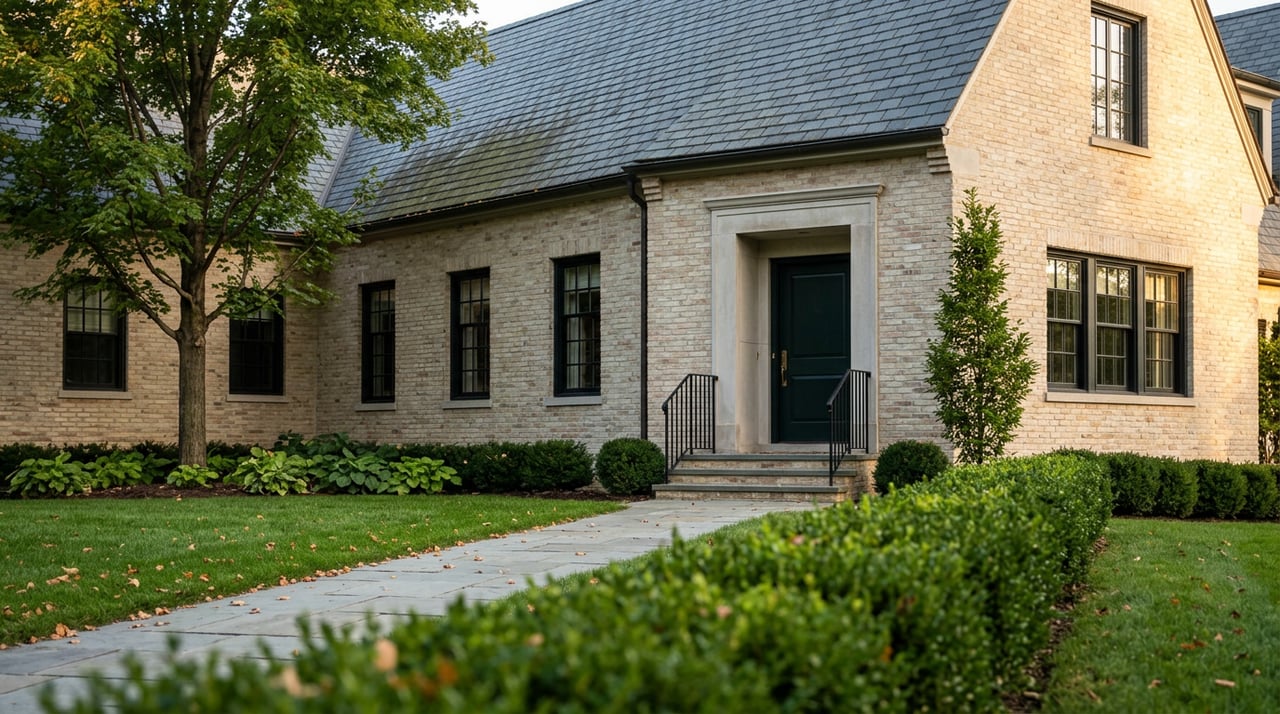
This isn't a story about a handful of unlucky listings. Lytton Park's housing stock is overwhelmingly Georgian, Tudor and Colonial Revival, built between 1890 and 1930, with most of the neighbourhood dating to somewhere between 1900 and 1945. That window sits almost entirely inside the decades when knob-and-tube was the standard, and often the only, method of wiring a house. A buyer touring three homes on the same block this fall isn't sampling a rare defect. They're sampling the default condition of the neighbourhood's original construction.
Some of that wiring has been fully replaced over the decades. Plenty hasn't, and a fair amount sits in a partial state: one renovated kitchen running modern circuits, the rest of the house still on the original knobs and tubes above a plaster ceiling nobody has opened in years. That partial category causes the most trouble in a transaction, because it solves nothing for an underwriter. A complete 2026 guide to the rewiring process is direct about this: insurers do not reinstate standard coverage on partial removal, and an Electrical Safety Authority certificate doesn't exist for a job that's half finished. A seller who updated the kitchen in 2019 and assumed the issue was handled is often handing a buyer's insurance broker exactly the same problem as a house nobody has touched.
| Wiring status | Typical insurer response in 2026 | Rough cost to resolve |
|---|---|---|
| Full home still on original knob-and-tube | Most major insurers decline new policies outright | $8,000 to $15,000 for a full rewire in a typical two-storey home; $20,000 to $30,000 for larger or more complex houses |
| Partial rewire, some rooms only | Treated the same as no rewire at all by most underwriters | $3,000 to $8,000 for remaining circuits, plus drywall or plaster repair |
| Fully rewired with an ESA Certificate of Inspection | Standard coverage available from most major insurers | Already spent, the certificate is the document that closes the underwriting question |
The $8,000 to $15,000 rewiring estimate that circulates for a typical Toronto two-storey home assumes drywall, or at least a mix of eras where an electrician can fish new cable through open stud bays without much resistance. Lytton Park's housing stock predates drywall almost entirely. Plaster over wood lath is the standard finish behind those Tudor and Georgian facades, and it adds real friction, and real cost, to a rewire. Contractors working this era of home report 15 to 25 percent more labour just to fish wire through original plaster compared with a postwar drywall house. Add the vermiculite attic insulation and asbestos-wrapped duct work common in homes this age, both of which need proper abatement before an electrician can safely open a wall or ceiling, and the number a buyer sees quoted for "a typical Toronto rewire" quietly stops applying to the house they're actually standing in.
None of this makes the project unaffordable. It makes the generic citywide number the wrong number to plan a closing around, and it means getting a quote specific to the house before conditions come off, not after.
The instinct to disclose nothing and let the buyer's inspector find it is understandable and expensive. Homes without a documented rewire certificate are selling at a 5 to 12 percent discount against comparable rewired homes, with longer time on market and a higher rate of deals falling apart midway through the transaction because a buyer's lender couldn't get insurance bound in time. A seller who commissions an electrician's assessment before listing, closer to $200 to $400 than $20,000, walks into negotiations with a number instead of a question mark. That number is a far cheaper thing to negotiate around than a buyer's financing collapsing three weeks before closing.
A few things worth doing before the sign goes up:
The mistake happens when a financing condition gets waived on the assumption that insurance is a formality. In a neighbourhood where most homes were built inside the knob-and-tube era, it isn't. Build the sequence in order: the home inspection first, then an electrician's assessment of the wiring specifically, then a call to an insurance broker, before the financing condition comes off, not after. Some insurers will offer coverage on the condition that the wiring is fully removed within 30, 60, or 90 days of closing. That sounds generous until it's measured against a moving timeline, a contractor's schedule, and the fact that Lytton Park's plaster walls make the job run longer than the citywide estimate suggests.
Does having any knob-and-tube wiring mean a home can't be insured at all? Not always, but the list of insurers willing to write new coverage on active knob-and-tube has narrowed sharply. A few specialty carriers still offer it, usually with a surcharge and a mandatory inspection, but most of the largest names in the Canadian market won't.
Is disconnected knob-and-tube treated differently? Wiring that's been properly capped and no longer carries current is generally a smaller concern for insurers than active wiring still powering circuits. It should still be confirmed and labelled by an electrician, since wiring assumed disconnected in an older home sometimes turns out to still be live somewhere in the run.
Does a partial renovation from a previous owner count for anything? Only if it was a complete rewire with a permit and an ESA Certificate of Inspection. A partial update, however well intentioned, is generally treated by underwriters the same as no update at all.
A Lytton Park character home is worth the plaster walls and the porcelain knobs waiting in the attic. It's also worth a conversation about what's actually behind those walls before an offer becomes a closing date. If you're weighing a purchase or preparing a listing in Lytton Park this fall, Courtney Smith can help you sequence the inspection, the electrician's assessment, and the insurance conversation in the right order, before any of it becomes a deadline. Let's Connect.
Stay up to date on the latest real estate trends.





Every client deserves a strategy tailored to their goals. With trusted market knowledge, clear communication, and dedicated guidance, Courtney is committed to helping you achieve the best possible outcome.